

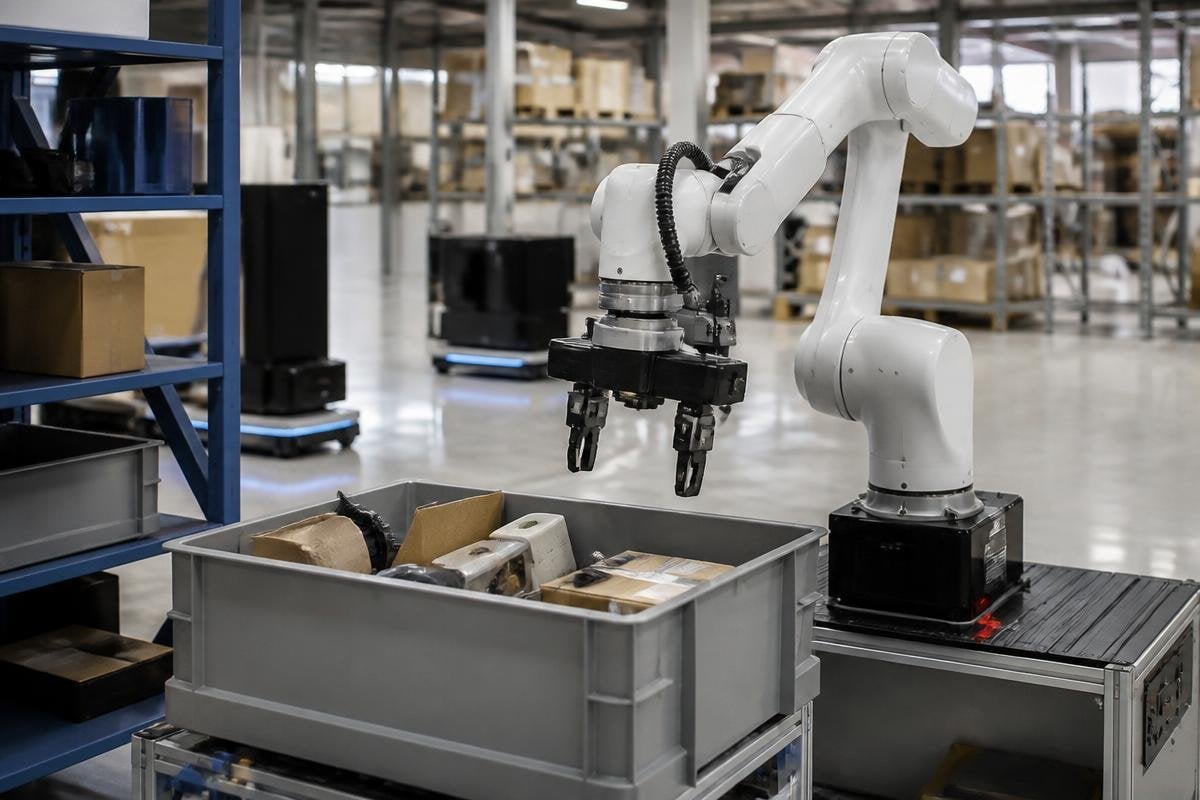
Robots can walk through a room, sort known objects, or follow a mapped route. The harder question is whether they can repeat useful work when the room, object, or task changes.
For a factory manager, the biggest missing advances are practical rather than flashy:
- Reliable handling of unfamiliar objects
- Safe autonomy around people and changing work areas
- Batteries, tools, and software that support a full work shift
Robots that can handle new objects
Most robot arms work well when the part, grip point, and movement stay fixed. Change the object or place it in a new position, and the robot may need new data, a new program, or help from a technician.
A useful robot would inspect an item, choose a grip, lift it without damage, and place it where the next machine can use it. That requires cameras, force sensors, motion planning, and control software to work together while the task is running.
The value is clear in work with mixed stock. A warehouse could handle returns without sorting every item into a separate process.
A factory could switch between small production runs without rewriting the robot’s motions each time.
The missing proof is repeatability. A short demo can show one successful pick. A buyer needs to see the same system handle many object shapes, poor lighting, blocked views, and items that arrive in the wrong position.
Safe autonomy in changing spaces
Autonomous mobile robots already move through mapped areas. The harder job is deciding what to do when a person stops in the route, a pallet blocks a lane, or another machine changes the normal traffic pattern.
A capable system must detect the change, choose a safe action, and explain that action well enough for a worker to respond. It also needs a clear stop function and a way to record what happened after an incident.
This matters because human work areas rarely stay fixed. A robot that needs every unusual event handled from a control desk can still help with transport, but it adds staff work at the point where autonomy was meant to help.
Reports on company deployments and autonomous systems from Robot24.com robotics coverage can tie a product claim to the site, task, operator role, and date behind it. Those details show whether the robot’s freedom reduces staff work or shifts the job to a control desk.
The open question is how much freedom a robot can have before its operator loses a clear view of the risk. Standards and safety checks can set limits, but each site still has its own layout, people, and failure modes.
A full shift without a long charge stop
Battery life limits many mobile robots, inspection platforms, and humanoid systems. Runtime also depends on payload, speed, floor condition, sensor use, and how often the robot stops to plan a move.
Short tests can still show value for a narrow task. A buyer planning a full shift needs the whole operating cycle: work time, charging, battery swaps, inspections, and recovery after a fault.
Better batteries would help, but the machine also needs lower power use and tools that can be changed without long manual work. Software updates matter too, since poor motion planning can waste energy on repeated moves.
I’d put reliable shift coverage above a more human-looking body. A machine that keeps doing one paid task for hours is easier to value than a system with a wide range of demos and no clear work rate.
Humanoids that earn their floor space
Humanoid robots attract attention because their shape fits spaces built for people. They may reach shelves, use existing tools, and move through doors without a new layout.
That shape brings hard engineering work. The robot must balance while carrying a load, place its feet safely, control its hands, and recover when contact with the floor or an object differs from the plan.
A useful humanoid needs a defined job, a measured work rate, safe failure behavior, and a cost that fits the task. Those facts matter more than the number of joints or the length of a demo video.
The unproven part is broad job coverage. A system may perform several tasks under close supervision while still needing a person for setup, recovery, and quality checks. Until those support hours are counted, the labor case stays incomplete.
A buyer’s check before the next pilot
Use these questions when a supplier presents a new robot:
- Ask for the task definition, including the object range, cycle time, and allowed errors.
- Check the operating record outside demos, with site name, deployment length, and number of units.
- Count human work for setup, charging, recovery, cleaning, and software changes.
- Test the safety response when a person, object, or route changes without warning.
- Price the full system, including tools, sensors, training, service, and spare parts.
The next useful robotics breakthrough will be easy to describe: a named task, a repeatable work rate, a known failure limit, and a cost that a real site can defend. Until suppliers publish those details, the machine may be ready for a trial, but the purchase case is still waiting.
